
What is a NIE number?
TL;DR
- The NIE (Número de Identidad de Extranjero) is Spain’s lifetime identification number for foreigners, issued by the Dirección General de la Policía.
- A NIE is requested with form EX-15 and costs €9.84 (tasa 790, código 012).
- The police must resolve a registered NIE application within a maximum of five days.
- A NIE does not grant residency and does not grant the right to work in Spain.
- A NIE number never expires and is never reassigned to another person.
Facts verified 9 August 2026 against the Sede Electrónica de la Policía Nacional
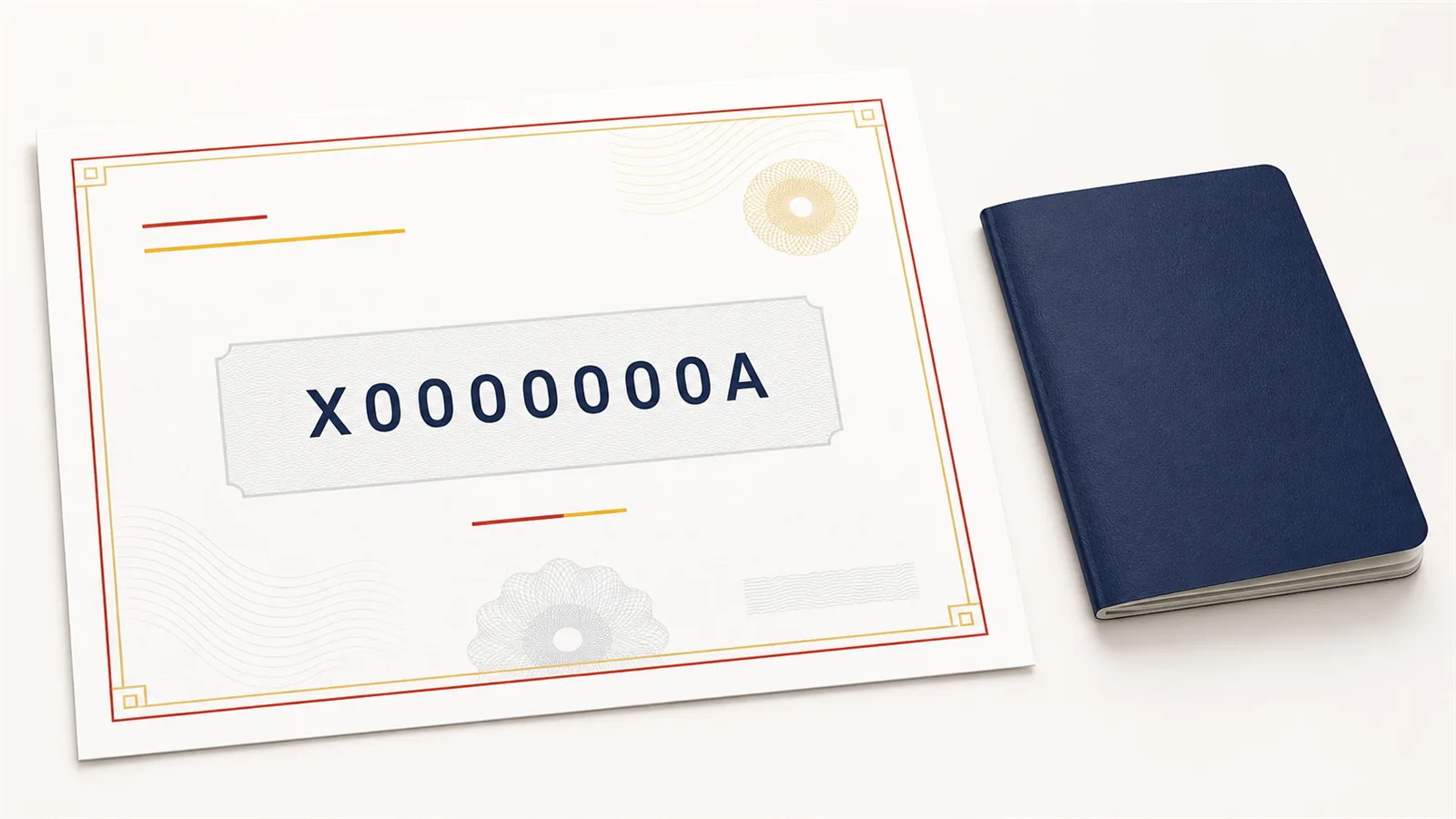
A NIE (Número de Identidad de Extranjero) is the personal identification number Spain assigns to every foreigner who deals with the country in any official capacity. It is issued by the Dirección General de la Policía, it never changes, and it is yours for life. It is a number on a white A4 certificate — not a card, not a visa, and not a residence permit.
Updated 10 August 2026
Key facts
| Full name | Número de Identidad de Extranjero |
|---|---|
| Issued by | Dirección General de la Policía |
| Application form | EX-15 |
| Official fee | Tasa 790/012 — €9.84 |
| Resolution deadline | 5 days from registration of the application |
| Validity | The number is for life |
| Grants residency or work rights? | No |
Why Spain gives foreigners a number
Spain identifies every person in its tax, property and administrative systems by a single number. Citizens use their DNI; foreigners get a NIE. The moment you do anything with legal or economic weight in Spain — buy a flat, open a bank account, inherit, sign a work contract, register a business — the system needs your NIE to record it.
The legal ground is set out in Real Decreto 557/2011 (the Reglamento de Extranjería): foreigners "related to Spain by reason of their economic, professional or social interests" are assigned a NIE on request, provided they are not in Spain irregularly. You do not need to live in Spain, and you do not need to be an EU citizen. You need a reason — and the reason must be stated in the application.
What the NIE is used for
You will be asked for your NIE when you:
- Buy or sell property — the notary cannot execute the deed without it
- Open a bank account — required for resident accounts, and most banks ask for it even on non-resident accounts
- Pay any Spanish tax — the NIE doubles as your tax identification number (NIF) for individuals
- Sign an employment contract or register as self-employed
- Inherit assets located in Spain
- Set up a company, get utilities connected, buy a car, get a Spanish SIM on contract
One number covers all of it. There is no separate "tax NIE" or "property NIE".
What a NIE does NOT give you
Four points where the NIE is most often misread:
- It is not a residence permit. Holding a NIE says nothing about your right to live in Spain.
- It is not a work permit. You cannot take up employment on the strength of a NIE alone.
- It does not expire — but certificates age. The number is permanent. The old three-month "validity" of the paper certificate was abolished; in practice, some notaries and banks still ask for a recently issued certificate, which you can re-request with the same form EX-15.
- There is no public NIE lookup. No official website lets anyone find a NIE by name. Services offering to "check" or "find" someone’s NIE online are a red flag.
NIE, white certificate, green certificate — quick disambiguation
The number arrives on a white A4 certificate — that is the standard NIE document for non-residents and non-EU citizens. EU citizens who move to Spain for more than three months register separately and receive a green certificate (Certificado de Registro), which contains their NIE but is a different document with different requirements. Non-EU residents carry their NIE on the TIE card. If you’re unsure which document you’re looking at, see what a NIE number looks like.
How you get one
In short: form EX-15, the €9.84 fee (tasa 790, código 012), your passport, and a stated reason — submitted at a police station in Spain, a Spanish consulate abroad, or through a legal representative under Ley 39/2015. The police must resolve the application within five days of registration; the real waiting happens earlier, in the appointment queue. The full comparison of routes is in the NIE number in Spain guide, including getting a NIE from the UK, Ireland or the US.
⚠ Scams to avoid
- Paid "guaranteed cita" offers. Police appointment slots are free of charge; resellers monetise the queue — they cannot create slots.
- "Official express NIE". No express track exists — the five-day resolution rule is the same for every application.
- "Check anyone’s NIE by name". There is no public NIE registry; any site claiming to look up a NIE by name is not using an official source.
FAQ
Is the NIE the same as the NIF?
For individuals, yes in practice: once you have a NIE, it functions as your tax identification number (NIF). Companies have a separate CIF-style NIF.
Does a NIE expire?
The number never expires. Only the paper certificate "ages" in the eyes of some institutions, which may ask for one issued in the last three months.
Can I work in Spain with just a NIE?
No. The right to work comes from your residence/work authorisation, not from the NIE.
Do I need to be in Spain to get a NIE?
No. You can apply at a Spanish consulate in your country, or remotely through a representative with a power of attorney.
Sources:
Sede Electrónica de la Policía Nacional — Asignación de NIE a instancia del interesado; official fee schedule (tasa 790/012), retrieved 9 August 2026; Real Decreto 557/2011 (Reglamento de Extranjería).
Reviewed by the Happy Residence S.L. team. Every figure on this page is checked against the official source on the date shown above; we re-verify after each annual fee order.
We are an administrative assistance service, not a public administration.