
Sending money to Spain
TL;DR
- A standard SEPA transfer in euros is credited the next business day; SEPA instant transfers arrive in 10 seconds or less, 24/7.
- Under Reg. (UE) 2024/886, eurozone banks may not charge more for an instant transfer than for a standard one.
- Transfers from outside the SEPA zone travel via SWIFT — slower, with correspondent and receiving-bank charges on top.
- The real cost of moving money is usually the exchange-rate spread, not the visible fee. Compare any offer against the mid-market rate.
- Cash of €10,000 or more crossing the Spanish border — or €100,000 or more moved within Spain — must be declared on form S1. Undeclared cash can be seized.
Facts verified 10 August 2026 against the Banco de España (clientebancario.bde.es) and the Agencia Tributaria
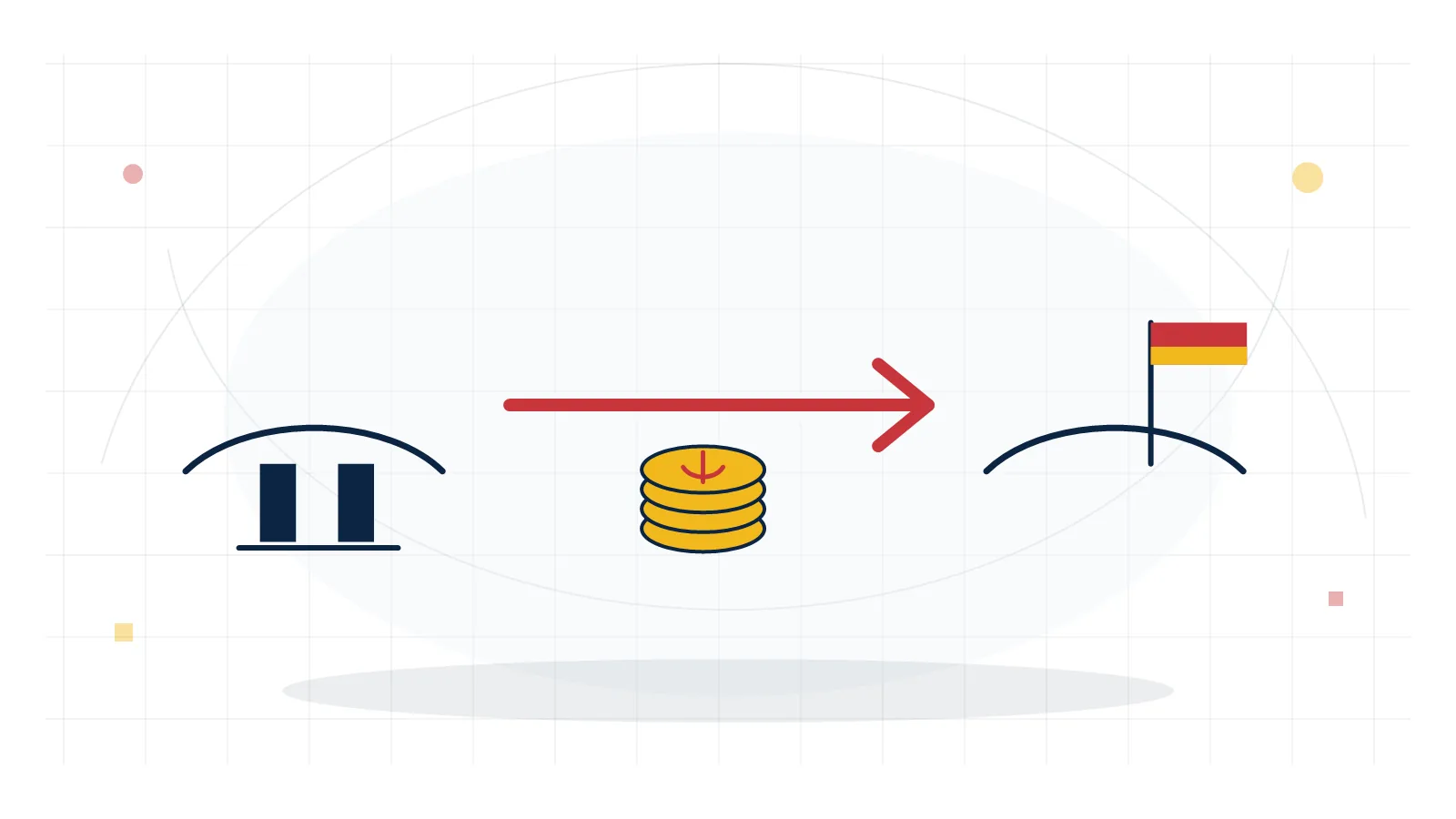
Every move to Spain eventually needs a large transfer: a deposit, a year of rent, the price of a flat. How you send it decides how much of it arrives. The mechanics — part of our guide to banking and money in Spain — come down to three questions: is the money already in euros, is it travelling inside the SEPA zone, and who sets the exchange rate along the way.
Updated 10 August 2026
SEPA vs SWIFT at a glance
| SEPA transfer | Transfer from outside SEPA (SWIFT) | |
|---|---|---|
| Where it works | 36 European countries, euro payments | Worldwide |
| Standard speed | Next business day | Several business days is common |
| Instant option | Yes — 10 seconds or less, 24/7 | No equivalent scheme |
| Cost structure | Same conditions as a domestic transfer | Sending, correspondent and receiving-bank charges |
| Currency conversion | None if sent in euros | Often applied en route, at the bank’s rate |
Inside SEPA: next day, or ten seconds
Within the Single Euro Payments Area, a euro transfer to a Spanish IBAN is treated under the same conditions as a domestic payment — the Banco de España’s client portal puts it plainly: the money arrives the next business day after you order it.
Instant SEPA transfers go further: credited in 10 seconds or less, at any hour of any day. Since Reg. (UE) 2024/886, this stopped being a premium product — eurozone banks had to be able to receive instant transfers from 9 January 2025 and send them from 9 October 2025, and they are not allowed to charge more for an instant transfer than for an ordinary one. The same regulation added a verification-of-payee check: the bank confirms that the name and the IBAN match before the money leaves.
From the UK and other non-euro countries
Sending money to Spain from the UK adds one step that decides the whole cost: somewhere between your pounds and the Spanish account, a currency conversion happens. If your money leaves as pounds via a SWIFT international transfer, expect a slower journey, charges from the sending, correspondent and receiving banks, and a conversion at whatever rate a bank in that chain applies.
The alternative is to convert first and send euros into the SEPA rails. Where you do the conversion is where the real price is set — which brings us to the spread.
The spread: where the money actually goes
Banks and transfer services rarely earn on the visible fee alone. The quiet earner is the spread: the gap between the mid-market rate — the rate the currency markets themselves trade at, the one you see on a finance site — and the rate you are given. A transfer advertised as "commission-free" can still cost several times more than one with an honest fee, because the margin is hidden inside the rate.
The method is simple and brand-independent: look up the mid-market rate at the moment of the quote, multiply, and compare what actually lands in euros. Specialised currency services compete close to the mid-market rate; traditional banks tend to price further from it. Run that comparison once with your own numbers and the difference funds a noticeable slice of your cost of living in Spain.
Cash and the S1 declaration
Bank transfers have no declaration threshold — the S1 rules are about physical cash and bearer instruments. Under Spain’s anti-money-laundering law (Ley 10/2010, as amended by Ley 7/2012):
- Carrying €10,000 or more into or out of Spain must be declared on form S1.
- Moving €100,000 or more within Spanish territory must also be declared.
- Travelling to or from another EU country, you file the S1 with the Agencia Tributaria in advance; to or from a non-EU country, you declare at customs when crossing.
- Undeclared cash can be seized on the spot by customs or police.
The declaration is free and the money stays yours — the S1 is a transparency measure, not a tax.
Transfers for a property purchase
When six figures land in a Spanish account before a property completion, the bank is legally required to ask where the money came from. Expect a source-of-funds request: sale contract for a previous home, savings statements, an inheritance deed — a paper trail matching the amount. Prepare it before the transfer, not after the account is frozen pending answers. Buyers financing part of the price should read our page on mortgages for non-residents — deposit and loan are checked against the same file.
⚠ Scams to avoid
- "Bring it in cash — no declaration, nobody will know." The S1 declaration is mandatory at €10,000, scanners at borders exist, and undeclared cash is seized.
- Last-minute IBAN changes by email. A classic completion-day fraud: an email that looks like your lawyer’s or the seller’s "corrects" the account number. Verify any change of payment details by phone on a number you already had.
- "Guaranteed rates" far better than mid-market. Nobody sells euros below the rate the market itself trades at. An offer that beats the mid-market rate is bait.
FAQ
How long does a transfer to Spain take?
In euros within SEPA: the next business day as standard, or 10 seconds or less as an instant transfer. From outside the SEPA zone via SWIFT, several business days is normal.
Do I have to declare a bank transfer to Spain?
No — declaration thresholds apply to physical cash, not bank transfers. Cash of €10,000 or more crossing the border, or €100,000 or more moved inside Spain, requires form S1. For large transfers, your bank may still ask you to document the source of the funds.
What is the cheapest way to send money to Spain?
Whichever route lands closest to the mid-market rate after all fees. Check the mid-market rate, get the final euro amount in writing, and compare — the visible commission is usually the smallest part of the cost.
Can my Spanish bank ask where my money came from?
Yes. Under Ley 10/2010 banks must verify the origin of significant funds. Providing a clean paper trail — sale documents, savings history, inheritance papers — is routine and speeds the transfer through.
Sources:
Banco de España — clientebancario.bde.es, "Transferencia SEPA" and instant transfer guidance; Agencia Tributaria — declaración de medios de pago (formulario S1); Reglamento (UE) 2024/886; Ley 10/2010 as amended by Ley 7/2012. Retrieved 10 August 2026.
Reviewed by the Happy Residence S.L. team. Every figure on this page is checked against the official source on the date shown above.
We are an administrative assistance service, not a public administration.