
Certificates of residence
TL;DR
- "Certificate of residence" in Spain is three different documents from three different authorities — the police, the town hall and the tax agency. They are not interchangeable.
- The certificado de residente / de no residente is issued by the Policía Nacional, requested with form EX-15 and resolved within a maximum of five days.
- The certificado (or volante) de empadronamiento comes from your ayuntamiento and proves your registered address, not your immigration status.
- The certificado de residencia fiscal comes from the Agencia Tributaria and proves where you are tax resident.
- Banks periodically re-verify the status of non-resident account holders; the police certificado de no residente is the standard proof.
Facts verified 9 August 2026 against the Sede Electrónica de la Policía Nacional and sede.madrid.es
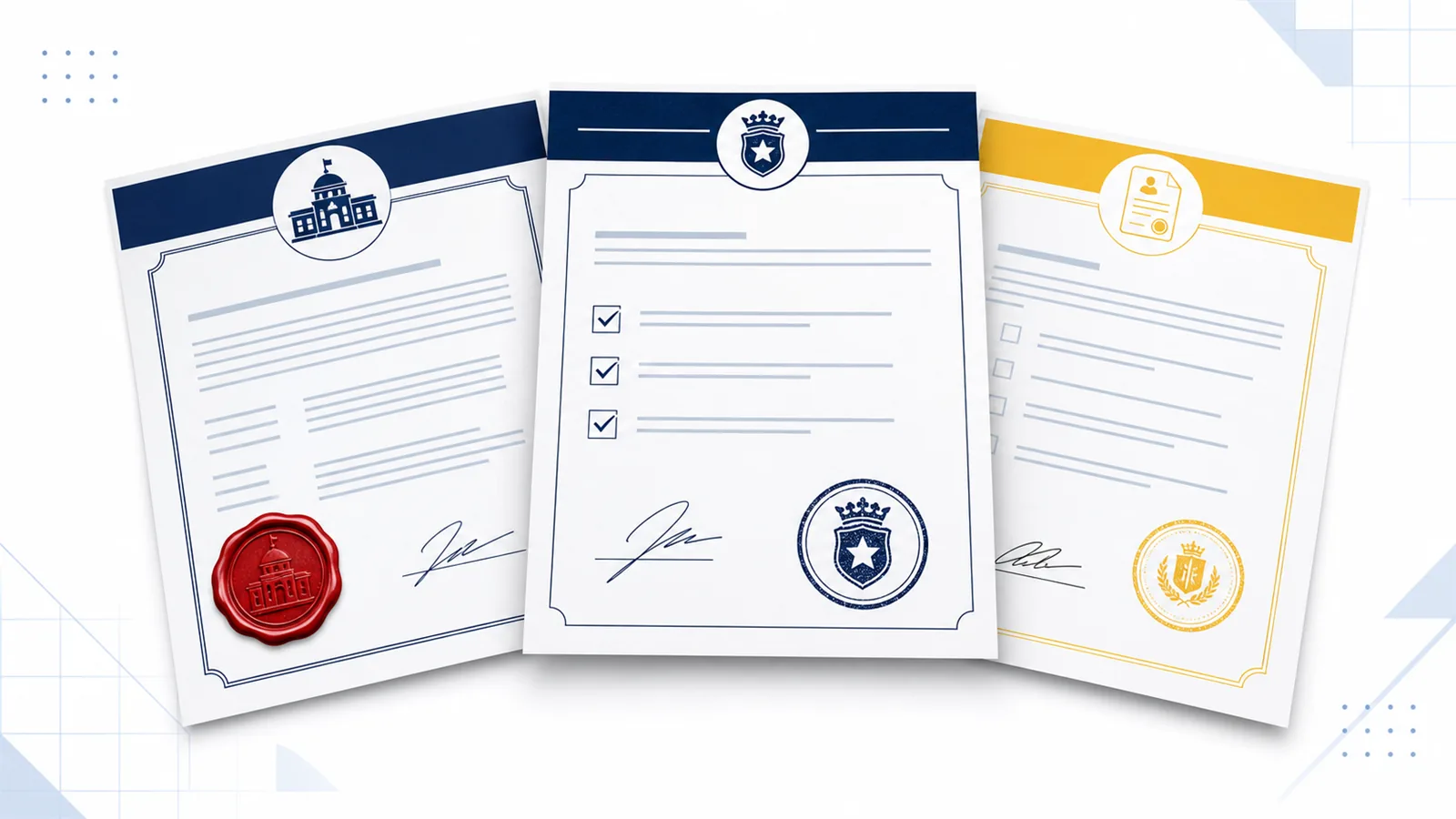
Sooner or later a Spanish bank, notary or consulate will ask you for a "certificate of residence" — and the first thing to establish is which of the three they mean. Spain issues residence certificates from the police, from the town hall and from the tax agency, each proving a different thing to a different audience. Asking for the wrong one costs you a week and a wasted appointment. This page — part of our guide to paperwork after you arrive — tells the three apart.
Updated 10 August 2026
The three certificates at a glance
| Document | Issued by | What it proves | Who asks for it |
|---|---|---|---|
| Certificado de residente / de no residente | Policía Nacional (form EX-15) | Whether you are, or are not, a legal resident of Spain | Banks, notaries at property sales, some consular procedures |
| Certificado / volante de empadronamiento | Your ayuntamiento (town hall) | Your registered address in the municipality | Healthcare registration, schools, DGT, TIE applications |
| Certificado de residencia fiscal | Agencia Tributaria | Where you are resident for tax purposes | Foreign tax authorities, double-taxation relief, banks abroad |
The police certificates: residente and no residente
The Dirección General de la Policía issues two mirror-image documents: the certificado de residente, confirming that you hold legal residence in Spain, and the certificado de no residente, confirming that you do not. Both are requested with form EX-15 — the same form used for NIE assignment — through an Oficina de Extranjería or a designated police station, and the police must resolve the application within a maximum of five days of registration.
These are the certificates with real money attached:
- Opening or keeping a non-resident bank account. Spanish banks must establish whether an account holder is resident or not, and they periodically re-verify that status — the certificado de no residente is the document they expect. Ignore a bank’s re-verification letter and the account can be blocked.
- Selling property as a non-resident. The buyer’s notary applies non-resident withholding rules to the sale, and the certificate is how your status is evidenced.
- Consular and civil registry procedures that turn on whether you live in Spain.
Institutions normally want a recently issued certificate — as a rule of thumb, one no older than about three months — so request it close to when it is needed, not "for the drawer". If you are outside Spain or cannot attend in person, the application can be made through a representative; e-residence runs a dedicated residence certificate service that obtains the police certificate by power of attorney.
The town-hall certificate: empadronamiento
The certificado de empadronamiento and its lighter sibling the volante de empadronamiento come from your ayuntamiento and prove one thing only: the address at which you are registered on the Padrón Municipal. The volante is informative; the certificado is the formal version accepted in administrative procedures. Neither says anything about your immigration or tax status — a tourist who rents a flat can be empadronado. This is the certificate for healthcare registration, school places, the DGT and TIE applications, and it is the one people most often confuse with the police document.
The tax certificate: residencia fiscal
The certificado de residencia fiscal is issued by the Agencia Tributaria and states where you are resident for tax purposes — including, on request, residence in the sense of a specific double-taxation treaty. It is the document a foreign bank, employer or tax authority wants when you claim treaty relief, and it has nothing to do with the police or the padrón versions. Holders of a digital certificate or Cl@ve can request it through the Agencia Tributaria’s sede electrónica.
Note the trap in both directions: being a legal resident (police) does not by itself make you a tax resident (Agencia Tributaria), and being empadronado proves neither.
Which one do you need?
- A Spanish bank asks you to confirm non-resident status → police certificado de no residente.
- You are registering with a doctor or a school → volante or certificado de empadronamiento.
- A foreign tax authority wants proof you pay tax in Spain → certificado de residencia fiscal.
- You are selling Spanish property as a non-resident → police certificado de no residente.
- You are exchanging a driving licence → the DGT side of that process is covered in exchanging your driving licence; expect to show your padrón registration.
Once you start working in Spain, a fourth document joins this family — the informe de vida laboral, your social security contribution history, which lenders often request alongside residence certificates.
⚠ Scams to avoid
- Paid "certificate appointment" resellers. The EX-15 application is filed with the police directly; appointment slots are free. Paying a third party for the slot buys you nothing the queue does not already provide.
- "Instant official residence certificate" websites. No private website issues police, padrón or tax certificates. A downloadable PDF from a commercial site is not an official document and will be rejected.
- Confusion sold as a service. Some intermediaries charge to deliver a volante de empadronamiento to a bank that asked for the police certificate. Check the table above before paying anyone.
FAQ
Which certificate does my bank want?
For resident-vs-non-resident status, the police document: the certificado de residente or de no residente requested with form EX-15. A padrón certificate does not answer the question the bank is legally required to ask.
Is the certificado de empadronamiento the same as a certificate of residence?
No. The padrón certificate proves your registered address in a municipality. The police certificate proves your legal residence status in Spain. Different authorities, different purposes.
How long is the police certificate valid?
The certificate states a fact as of its issue date. In practice institutions want a recent one — commonly no older than around three months — so request it shortly before you need it.
How often do banks re-check non-resident status?
Banks periodically re-verify whether non-resident account holders are still non-resident; the exact rhythm varies by bank. Treat any such letter as genuine bank compliance, not spam — but deliver the documents through your branch or the bank’s own app, never through links in unexpected emails.
Sources:
Sede Electrónica de la Policía Nacional — Certificado de residente and Certificado de no residente (form EX-15, five-day resolution); sede.madrid.es — Padrón Municipal, volante and certificado de empadronamiento; Agencia Tributaria — certificado de residencia fiscal. Retrieved 9 August 2026.
Reviewed by the Happy Residence S.L. team. Every figure on this page is checked against the official source on the date shown above.
We are an administrative assistance service, not a public administration.